
Edition: 2026-09-23. Evidence: 72 dossiers, observed 2026-09-23. This is an opinion piece; the claims about market evidence are grounded in the dossier record.
Every few years, a headline declares that LEGO outperforms gold, stocks, or fine wine as an investment. It's a great headline. It's also a myth — and the 2026 evidence dismantles it piece by piece.
The transaction record doesn't exist. The myth needs a market: documented buys and sells, at scale, with verifiable prices. What the 2026 research pass actually found: zero qualifying dated sold transactions for the retired-legends category. The "data" behind the myth is asking prices, guide estimates, and YouTube titles — and the dossiers are explicit about the difference. The Mr. Gold "$30 fake vs $6,000 real" framing is a YouTube title, never a sold comp. Brick Ranker's £2,650 Zur-En-Arrh and $1,887.90 Cloud City Boba Fett are six-month modeled ledgers, not receipts. Brickset's own retired-set guidance says to use BrickLink averages "for guidance, not guarantees" — and even those weren't captured as primary records. A market without transactions is a story, not an asset class.
The fakes eat the premium. The myth assumes the thing you bought is the thing that's valuable. In rare LEGO, it often isn't. The Mr. Gold market runs 20 fakes for every real figure. The Toy Fair exclusives have documented Chinese counterfeits. The Zur-En-Arrh market has "near identical" customs. Authentication — certificates, hand-numbered badges, documented provenance — is the actual product, and it's a tax the myth never mentions. Buy the wrong one and your "investment" is worth the plastic it's printed on.
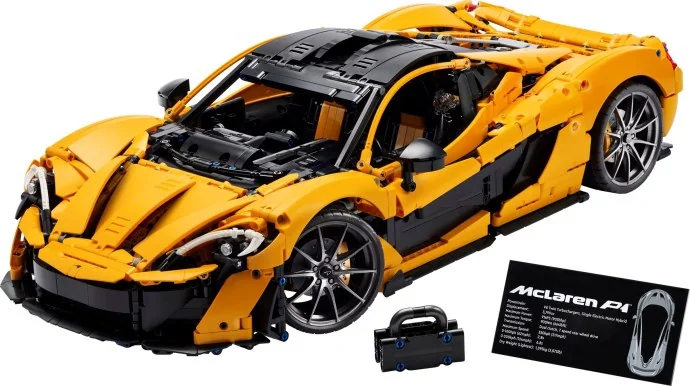
The winners are survivorship bias. The myth's exhibits are always the same: the sets that went up. What's never in the headline: the sets that didn't. The 42131 CAT D11 — $449.99, the loudest value complaints in the Technic line, "only on discount or used." The 42143 Ferrari Daytona — "underwhelming" next to the Sián, selling used at a third off within the same line. The 21348 Dungeons & Dragons set — the loudest disappointment in Ideas, "very underwhelming" at $359.99, its minifigures the only part anyone defends. The 10332 Medieval Town Square — solid reviews, but the Castle-fan consensus is "wait for a good sale," which is not what an appreciating asset sounds like. For every 10179 that became a grail, there's a flagship that depreciated the moment the receipts cooled. And even the grails aren't safe: Den of Geek documents that the 75192 Falcon remake depreciated the original 10179. The remake risk is the myth's unmentionable — LEGO can reissue your investment at any time, and has.
The costs are real and uncounted. Storage. Insurance. The sealed premium evaporates the moment you open the box — so the "investment" is a box you can't touch, in a closet you can't use, for a decade. Meanwhile the opportunity cost compounds: the same $680 that bought a sealed Titanic could have bought the Rivendell on discount, the Defender used, and the Shrek series scanned — and you'd have built all three. Compare that to the actual buyer guidance in the 2026 evidence: buy the Defender used, wait for the Rivendell discount, scan the Shrek boxes. The community's folk wisdom is about consuming LEGO well, not about warehousing it. The myth asks you to be a warehouse. The hobby asks you to be a builder. Only one of those has a documented return — and it's measured in evenings, not dollars.
Who the myth serves. The myth has beneficiaries, and they're not the buyers. It serves the YouTube finance-content pipeline (the "$30 fake vs $6,000 real" title is the genre in miniature — the numbers are the content, not the data). It serves resellers, for whom every "investment" buyer is a future seller paying the spread. And it serves the sealed-box industrial complex: the graders, the storage sellers, the premium-box market. The myth needs you to buy and never open. The hobby needs you to buy and build. Those are opposite actions, and only one of them is fun.
The honest version. LEGO can hold value. Specific retired sets in specific conditions with specific authentication do sell for multiples of retail — the modeled aggregates say so, the forum lore says so, and nobody in the evidence disputes it. But "can hold value" is not "outperforms gold." It's a collectible with a thin, illiquid, fraud-prone secondary market, no verified transaction record at scale, remake risk from the manufacturer, and carrying costs the headlines never model. Buy the set because you want the set. If it appreciates, that's luck, not strategy — and the moment you buy for the appreciation, you're the liquidity the myth needs. The bricks are the asset. Everything else is marketing.
Sources
Named sources are cited in the text above; no direct source URLs were captured in this research pass.