Edition: 2026-09-23. Evidence: 8 Category E dossiers, observed 2026-09-23. This category's valuations are UNVERIFIED unless a dated transaction is named — and none was found in this pass.
This category is different: none of these sets are available at retail. Everything here is bought on the secondary market — eBay, BrickLink, estate sales, collector trades — and the single most important thing to know is that this research pass found zero qualifying dated sold transactions for any of the eight sets. Not one. What exists instead is asking prices, estimates, undated reports, and community lore. Every piece of this category that treats those as facts is lying to you; this review will not. The honest version: these are sets with real demand and real owner affection, priced in a market where the transaction record is almost entirely private.
The picks, by use case
You want the retired set with the happiest owners. Buy 21322 Pirates of Barracuda Bay (retired 2021). The verdict is the clearest in the category: 30 eBay product ratings, all 5 stars, with dated verified-purchase reviews spanning 2020–2023 — the strongest dated owner evidence of any E item. "This Set Has EVERYTHING," wrote one owner whose daughter saved up and built it over days; a Classic Pirates forum owner calls it "an epic love letter to classic LEGO Pirates." The convertible design — shipwreck-island diorama or full sailing ship, 8 minifigures plus shark, pig, parrots, crabs, frogs, and two skeletons — is why it earns the affection. Its valuation fields stay UNVERIFIED for lack of dated sales, but as a retired set bought for love rather than investment, the verdict is unambiguous: buy it if you can find a complete copy. The buy is for enjoyment, not appreciation.
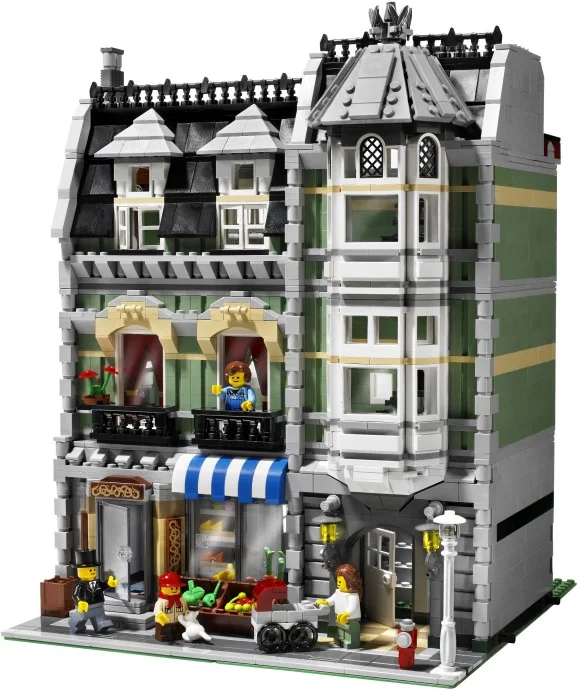
You're completing a modular street. Buy 10190 Market Street or 10185 Green Grocer. Market Street is "the modular line's undisputed value outlier — a sub-$90 set with the strongest secondary demand in the theme." One observed $694.99 used sale is the closest this pass came to a dated transaction, but without a confirmed year it stays outside the verified fields — treat it as an anecdote, not a comp. Green Grocer (retired 2010) is "the modular the community tells newcomers is 'the one that got away'" — collector reputation rock-solid, valuation fields honestly empty. The sand-green scarcity story is the qualitative signal: sand-green elements carry premium replacement cost, so a copy missing them isn't a bargain. For both modulars: completeness and rare parts matter more than price history. Audit before money moves.
You want the accessible giant. Buy 10256 Taj Mahal (2017, 5,923 pieces): still the biggest Creator Expert build, with visible secondary turnover. But visible turnover without prices is not valuation: the sold fields stay UNVERIFIED, and the Kijiji asking price is a reminder that huge used sets trade with completeness risk. A 5,923-piece completeness audit is the practical buying question — budget time, not just money.
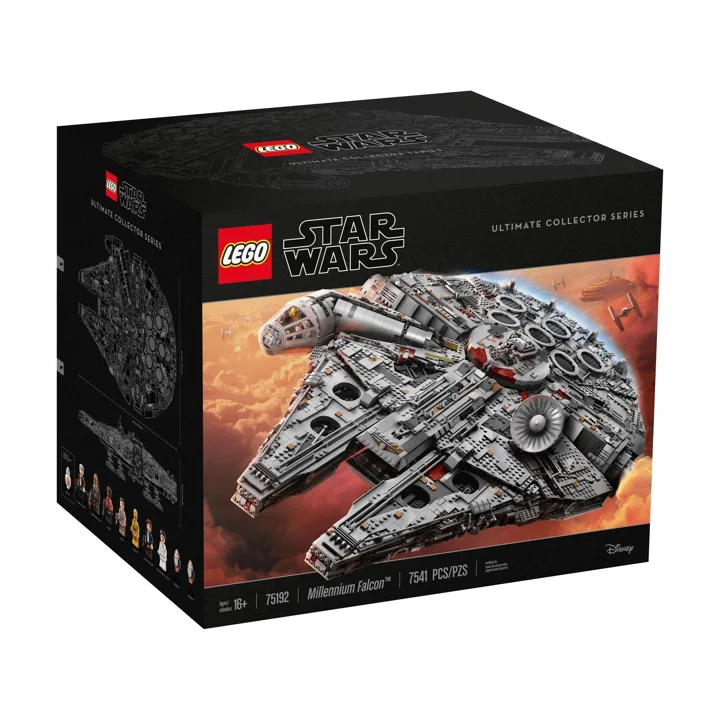
You want the original grail. Understand 10179 UCS Millennium Falcon first. It remains the grail symbol — "what many consider to be the greatest LEGO set of all time" (Antique Trader) — and it's the set that made LEGO a serious "alternative asset" conversation. But Den of Geek documents the turn: 10179 "used to command even double the price it does today, but because of the 2017 remake, it has depreciated over time." Reported ranges ($3,400–$5,700 per Antique Trader) are estimates and undated reports, not a transaction record. Buy it as memorabilia; do not buy it as a thesis.
You want the play-scale Death Star. Buy 10188 (retired): a decade-plus of discussion history makes it one of the best-documented E items qualitatively — but documentation is not transactions. Sealed-copy premiums are widely discussed; treat the "~$960" figure as community reporting, not a verified sale. The 24-figure completeness risk is the practical check.
The traps
Treating asking prices as sold prices. This is the category's central trap, and it catches experienced buyers. A BrickLink listing at $X is not a sale at $X. A YouTube video titled "$30 fake vs $6,000 real" (about Mr. Gold, not this category, but the same principle) is a title, not a transaction. An aggregate "average" from a third-party site without primary records is a model, not a market. Every figure in this review is labeled for what it is.
Buying 10179 to beat 75192. The Star Wars category's review reaches the same conclusion from the other direction: the current UCS Falcon is the better buy for the builder, and the original's market was reset by the remake. The two reviews agree because the evidence does — treat 10179 as the historical artifact it is.
10181 Eiffel Tower (2007) without knowing the evidence is thin. A landmark-collector favorite whose secondary market clearly turns over — but this pass found no dated priced transactions, making it the E item with the thinnest evidence base. Don't pay premiums anchored to lore alone.
3450 Statue of Liberty (2000) without a condition audit. Genuine collector demand, no verifiable sold transactions — and at 26 years old, condition is the practical buying question, not price history. Yellowing, clutch wear, and box condition move the price more than any "value" figure.
What the evidence actually looks like
It's worth saying plainly what sits underneath this category's valuations, because the numbers you see quoted online almost never come with it. For these eight sets, the research pass found: dated verified owner reviews (strong, especially for Barracuda Bay), active secondary turnover (visible for the Taj and the Eiffel Tower), asking prices on marketplaces (widespread), estimated-value ranges from collector publications (Antique Trader's $3,400–$5,700 for 10179), and community lore ("the modular the community tells newcomers is the one that got away"). What it did not find, for any of the eight, is a dated sold transaction — a price, a date, a completed sale. The 10190's $694.99 used-sale observation is the closest the pass came, and it lacks a confirmed year. That gap is not a research failure; it's the market's shape. Private sales, collector trades, and auction results are mostly not published, and public listings are asking, not clearing. Any valuation that doesn't carry that caveat is asking you to trust a number with no record behind it.
The fine print
For every set here, the buying checklist is the same: (1) completeness audit — count the rare parts, not just the pieces; (2) condition audit — yellowing and clutch for old sets, electronics for motorized ones; (3) sealed-premium sanity — sealed copies trade at discussed premiums, but "discussed" is doing the work in that sentence; (4) never anchor to a YouTube title, a forum claim, or an aggregate without primary records.
The bottom line
Barracuda Bay for love, Market Street and Green Grocer for the modular street, the Taj for the giant, and the Falcon for the story. The secondary market runs on demand, not data — and the most expensive mistake you can make is confusing one for the other. If a price has no date and no receipt, it's a rumor with good typography.
Sources
Named sources are cited in the text above; no direct source URLs were captured in this research pass.