Edition: 2026-09-23. Evidence: 6 Category F dossiers, observed 2026-09-23; street/retirement/resale UNVERIFIED unless dated in text.
Ideas is LEGO's fan-born line: 10,000 votes, a LEGO review, and a designer's garage build becomes an official set — always smaller than the fan version, always with LEGO's compromises. The line's signature phenomenon is the stepdown: the fan design loses pieces, features, and minifigures on the way to retail, and the community keeps score. The buying question is always whether what survived the stepdown is worth the price. Nobody buys Ideas for the engineering showcase; they buy it because a fan's specific vision — a rocket, a typewriter, an alien — survived the corporate translation intact enough to matter. The best Ideas sets feel like fan builds that got a budget; the worst feel like budgets that got a fan build.
The picks, by use case
You want the current Ideas conversation. Buy 21370 E.T. The Extra-Terrestrial ($139.99, released August 1, 2026). The fan designer is Richard Lemeiter ("Lafabrick"), and the stepdown is documented: 2,990 pieces / ~30 cm in the fan design became 1,226 pieces / 24 cm at retail — the pre-release debate was whether it would feel too small. Early sentiment is warm: the light-up heart and the sunflower pot are the cited delights, posable head/mouth/arms/wrists/fingers, and no major controversy at check time. One reviewer's framing is worth keeping: the model "attempts to preserve the emotional language that defined Spielberg's original film... the model succeeds because it understands that E.T.'s greatest strength has never been visual spectacle. It has always been emotional connection." That's the buy case in one sentence — and the honest caveat: owner-build evidence is still emerging.
You're a Tintin fan. Buy 21367 Tintin Moon Rocket ($159.99, released April 2026) — with the discount caveat. The owner verdict is the cleanest in the category: "Build - Repetitive | Finished - Beautiful!" (5★, AndyRibbit), "best lego set ever" (GoofyCookie037), and Eurobricks' "Great set, even if overpriced... Definitely wanna get it once there is a discount." The fan design had no minifigures; LEGO added the crew, including Tintin's brand-new quiff hair mold. The tradeoff: a repetitive Technic-core build, and $160 for 1,283 pieces is the whole discourse ("This such a cool set, but the price is obscene!"). Eurobricks keeps the missing-from-fan-design list: the launch ramp, Snowy's helmet, the standard outfits, the full interior — the IP owners insisted on accurate rocket shaping, which constrained the interior. Wait for a discount.
You want the family ritual. Buy 21330 Home Alone ($249.99, 3,955 pieces) — still listed at retail, though retirement is unverified and owners are already treating it as retiring-soon. The use case is specific and well-documented: families build it as an advent calendar — "My boys and I use this as a advent calendar for December... we did one bag a day!!!!" and "My grandkids put this set together over Christmas... I love looking at it every day and will treasure the memories." 24 bags, one a day, leading to Christmas. The movie-reference density carries it: the basement furnace, the Christmas tree, the spider, the sled down the steps, the iron, even the burglar's gold tooth — "The list goes on!" If you want it for this December, don't wait for the retirement announcement.
You want the mechanism. Buy 21327 Typewriter ($199.99, retired 2022) on the secondary market: "by far one of the more complex builds for a LEGO Ideas set," finicky in assembly ("very difficult and probably required a second pair of hands"), but the finished object fools people — "On quick glance, the model even looks real," and owners love the printed key tiles and the exact typewriter sound. The honest reviewer's note: "I am not sure I am one of them [the target niche]... if the LEGO Group had not sent me this model, I probably would not have bought it for full price." Buy complete, buy carefully, and expect a challenging build — the kind where a second pair of hands holding pieces in place is a legitimate instruction.
The traps
21323 Grand Piano if you expect a playable piano ($399.99, still available, retiring soon). The display-owners' verdict is extraordinary — "absolutely hands down the best Lego set I have ever owned, solely because of how realistic it is" — and owners are explicit: "Buy it at retail before it is gone because there may never be a set like it." But the expectation management is equally explicit: "if you purchase the set assuming that the piano is properly playable... you'll be disappointed. The sound comes via the phone app and the keys move randomly while songs play." It's a beautiful showpiece that plays music via your phone — "a very expensive music-box," per one critic, "the world's most expensive phone stand" per another. Buy for the object, not the instrument. And the price history matters: $349.99 at launch, raised to $399.99 in August 2022.
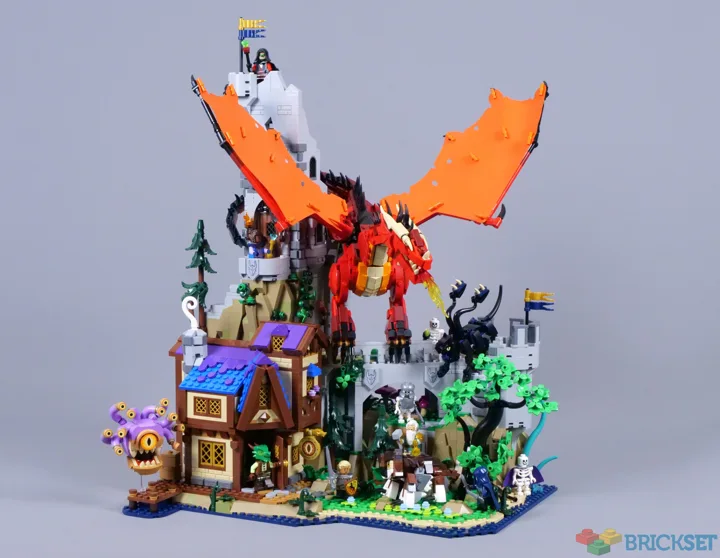
21348 Dungeons & Dragons: Red Dragon's Tale on the secondary market ($359.99 last list, retired June 2026). A rich build — "Packs a whole adventure into one set... Many secrets and references," with "the general lack of repetition" praised and a digital D&D adventure included — but the documented knocks are "A little too expensive. Dragon is underwhelming," and the minifigures are now "virtually extinct" post-retirement per GameRant. If the figures are why you're buying, verify them before money moves; the set's FOMO is figure-driven.
E.T. at hype prices. The reveal coverage was warm and the leak-to-launch story is fun, but the set is weeks old and the long-term owner verdict doesn't exist yet. Buy it at retail because you love the film, not because the internet is excited this month.
The fine print
The stepdown is the line's constant: E.T. lost ~60% of its pieces, Tintin lost its launch ramp and full interior, and the community catalogues every missing item. But the line's speed is underappreciated — Tintin went from 10,000 votes to shelves in under a year, "a notably fast turnaround for the Ideas platform," and the fan designers are named, celebrated, and interviewed (Lafabrick, TKel86), which is worth remembering when the stepdown frustrates you. The piano's $50 price increase is the line's other lesson: "buy it at retail before it is gone" is real advice when the retirement window is open and the price only moves one direction. And the detail density is the quiet payoff — Home Alone's basement furnace, gold tooth, and sled-down-the-steps; D&D's secrets and references; E.T.'s sunflower pot. The reviewers who love Ideas sets love them for the references, not the engineering.
The bottom line
E.T. for the moment, Tintin for the shelf (on discount), Home Alone for December (buy it now), the Typewriter for the mechanism (used, complete), and the Piano at retail before it retires — but only if you want a showpiece, not an instrument. In Ideas, the fan dream survives the stepdown more often than the forums admit; the price survives it less often. And if you only learn one thing from this line: never pay full price for the thing the fan designer built bigger. The discount is part of the design.
Sources
Named sources are cited in the text above; no direct source URLs were captured in this research pass.